

The opening of the Union of Mongolian Artists Exhibition Hall in the autumn of 1967 marked the beginning of a tradition that endures to this day: the annual Autumn exhibition, a showcase of the country’s finest contemporary fine art. True to that legacy, this year’s exhibition opened on September 21 and will remain open to the public through September 30.
Artist, professor, and Doctor of Art Studies Ts.Erdenetsog offered the following reflection on the significance of the Autumn exhibition. “Looking back at the history of world art, the first fine art exhibition was held in Paris in 1763. Not long after, in 1765, similar exhibitions began appearing in the German cities of Dresden and Munich. In Mongolia, the story begins somewhat later, during the period of Autonomy. By decree of the Bogd Khaan, issued in the first year of the People-Proclaimed era, the most accomplished artists of Khuree (then capital) were summoned and commissioned to produce a series of sketches, both large and small, capturing scenes of rural life as it unfolded around Ikh Khuree through the spring, summer and autumn months. These genre paintings were later brought together in what might be called Mongolia’s first open-air exhibition, presented for public viewing. Artist D.Damdinsuren recalled the moment in his memoirs: a sweeping panorama of Ikh Khuree was painted and mounted on a massive board beneath a tall canopy near the Upper Temple, today the site of the Bogd Khaan Museum. Tragically, the work did not survive, it was destroyed by cannon fire.”
Beyond simply presenting works to the public, the Autumn exhibition has long served a deeper purpose to celebrate artistic achievement and to illuminate the stylistic evolution and technical progress shaping Mongolian art from one generation to the next. History reminds us that every era carries its own undercurrents of extremism and intellectual uncertainty. Even within democratic societies, a kind of reflexive narrow-mindedness, one that dismissed the very essence of realist art, lingered for years. Exhibitions themselves take many forms. Some are held annually, others biennially or triennially, some are solo showings, others joint or collective efforts spanning dozens of artists. Scale and participation vary widely, yet one measure has always mattered above all others, artistic skill and aesthetic integrity.
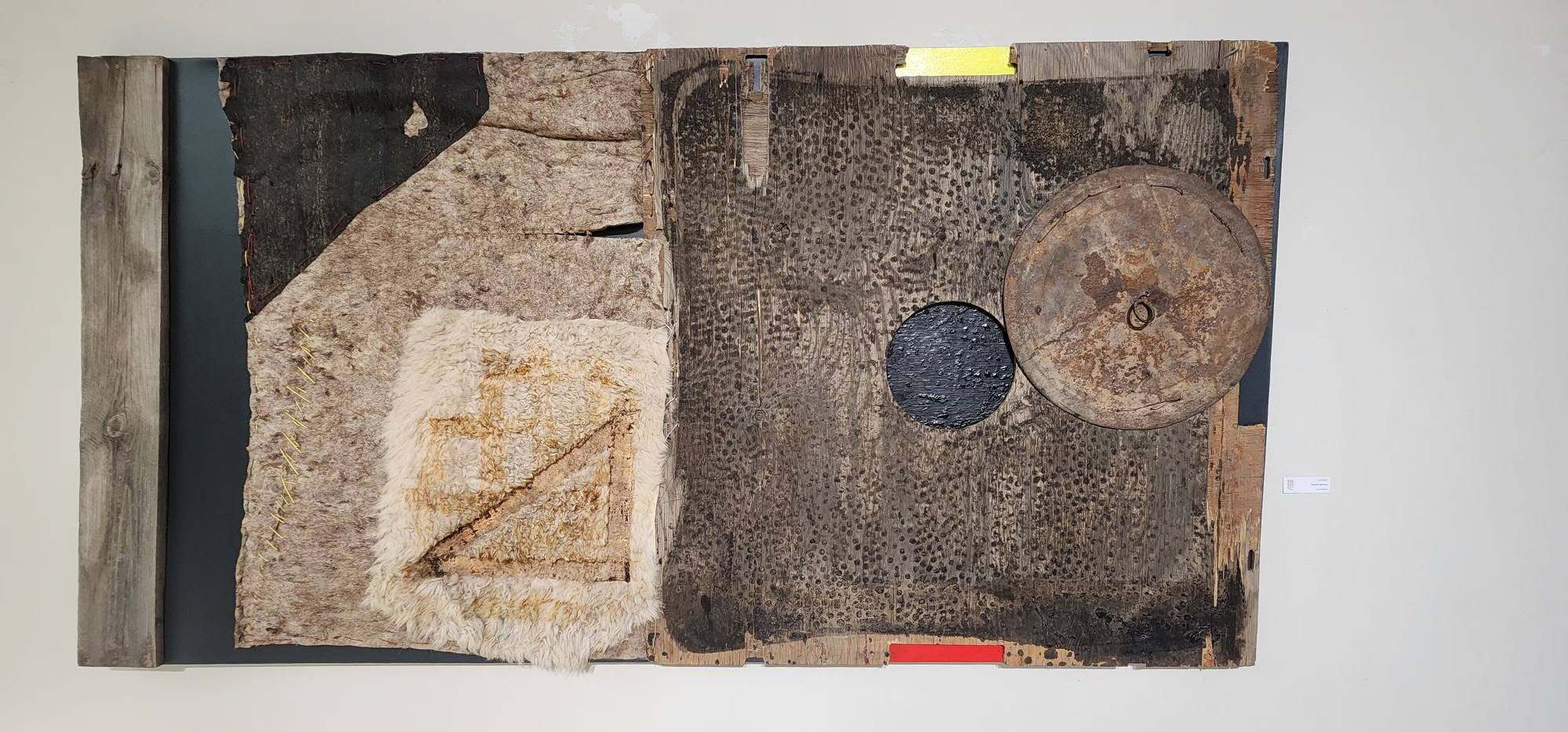
Exhibitions that bring together diverse genres and present truly exceptional work carry outsized influence, often coming to define the artistic character of their era. Today, Mongolian artists find themselves navigating a rich and sometimes divergent path. Some remain devoted to tradition, while others lean firmly toward the modern and contemporary. Between these poles, a third current has emerged, distinctive works that reimagine realism through a fresh, contemporary lens. Together, these varied approaches, all on display at this year’s Autumn exhibition, offer a vivid portrait of an art scene in the midst of meaningful transformation.
The task of selecting and presenting these works falls to the exhibition’s curators and organizers, and it is a responsibility they clearly take seriously. An exhibition, after all, should never be reduced to something merely glanced at in passing. At its best, it becomes a curated world unto itself, one capable of stirring genuine reflection, drawing viewers inward, and rewarding those willing to pause and truly look. It is encouraging to see the prestige of these collaborative showcases being restored, buoyed by a renewed commitment to rigorous evaluation and a willingness to select only work that meets the highest artistic standard.


